
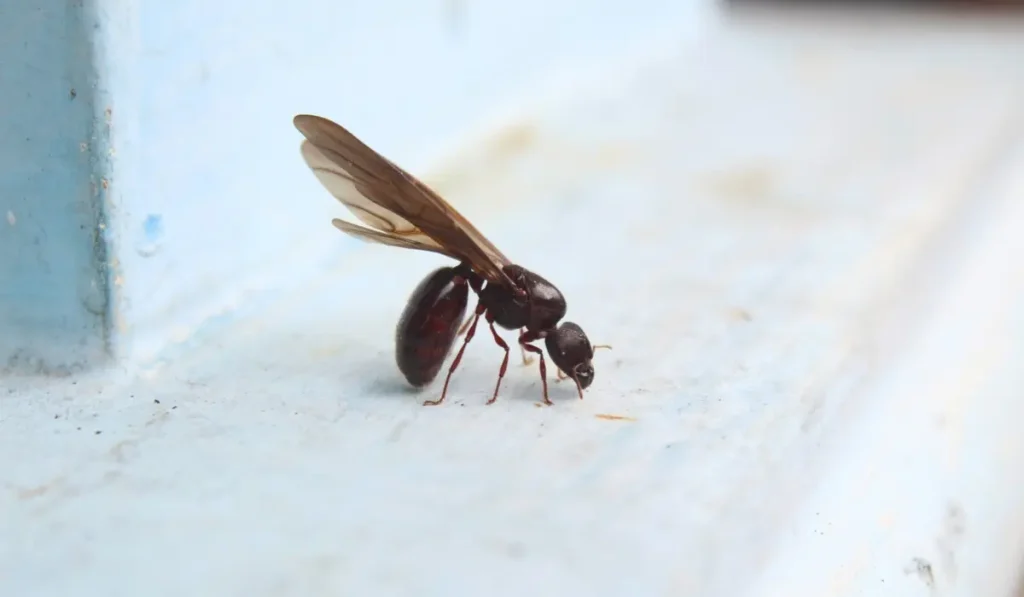
Finding winged insects on a window sill after a spring rain can leave you wondering whether you’re dealing with flying ants or termites. Flying ants in Georgia have pinched waists, elbowed antennae, and front wings that are generally larger than their back wings. Termite swarmers have broader waists, straighter antennae, and wings of similar length. Knowing these differences can help you determine whether insects have entered from outside or may be nesting in or near your home.
Flying Ants in Georgia vs. Termite Swarmers: How to Tell Them Apart
Flying ants aren’t a separate species. They’re winged reproductive ants, called alates, produced by established colonies. Termites also produce winged reproductive adults, so both insects can appear around windows, doors, and porch lights during swarming activity.
This distinction matters during spring when homeowners may notice winged insects after warm, humid weather. Their physical characteristics, rather than the time of year alone, provide the most useful identification clues.
Check the Wings, Waist, and Antennae
Flying ants have narrow, pinched waists that separate their body sections. Their antennae bend at an angle, and their front wings are generally larger than their hindwings.
Termite swarmers have broader waists without the same pronounced narrowing. Their antennae appear straight or beadlike, and their two wing pairs are usually similar in length.
The University of California Integrated Pest Management Program provides identification and management information for ants and other household pests.
| Feature | Flying Ant | Termite Swarmer |
| Waist | Narrow, visibly pinched | Broad, without a pronounced pinch |
| Antennae | Elbowed | Straight or beadlike |
| Wings | Front pair generally larger | Both pairs generally similar in length |
| Body sections | Clearly defined | Less distinct at the waist |
| Wood activity | Carpenter ants excavate wood for nesting | Termites feed on cellulose, including wood |
Don’t rely on color alone. Both flying ants and termite swarmers can appear dark brown or black, making their body shape and wing proportions more dependable for identification.
What Discarded Wings Can Tell You
Both reproductive ants and termite swarmers can shed their wings after dispersal. Finding discarded wings around windows or doors doesn’t automatically identify the insect.
Look at where the wings have accumulated. A one-time discovery near a patio door left open during warm weather differs from wings repeatedly appearing beneath the same section of interior trim.
If you find an intact insect, photograph its body and wings before disposing of it. Clear pictures can help a pest control technician distinguish ants from termite swarmers.
What Does a Swarm of Flying Ants Inside Your Home Mean?
An indoor swarm can occur when flying ants enter through open doors, damaged screens, or other exterior gaps. It can also indicate that winged ants are emerging from a colony located inside the structure or nearby.
The location of the activity matters. A group of ants gathered near a patio door may have entered from outside, while insects repeatedly appearing through the same baseboard gap suggest activity that deserves investigation.
Outdoor Visitors vs. Indoor Nesting Activity
Homes with screened porches, decks, and frequently used patio doors can provide opportunities for winged ants to enter during outdoor swarms.
For example, you might notice a few winged ants inside after leaving a patio door open during a warm evening. If the insects disappear and activity doesn’t return, they may have been outdoor visitors.
However, ants repeatedly emerging from a baseboard, window-trim joint, or wall gap deserve closer attention. Worker ants traveling through the same opening can provide another clue that a colony is nearby.
Signs That Call for an Inspection
Recurring swarms, worker ant trails entering structural gaps, and activity near damaged wood warrant investigation.
Look for damp window framing after heavy rain, softened wood near plumbing leaks, or coarse debris beneath wooden trim. These conditions can point toward carpenter ant nesting activity.
Older homes may have aging window seals or previous water damage worth investigating. Newer homes can also develop moisture problems around poorly sealed openings, so the age of the property doesn’t determine whether carpenter ants are present.
If you can’t distinguish the insects from termite swarmers, arrange identification before choosing a treatment.
Why Do Flying Ants Appear After Rain in Georgia?
Georgia’s warm, humid spring conditions can coincide with reproductive flights by several ant species. Homeowners may notice more winged insects around porches, exterior lights, and windows after periods of rain.
However, different species swarm at different times, and flying ants can appear outside the spring season.
Rain doesn’t cause ants to suddenly grow wings. Reproductive adults develop within established colonies before emerging during favorable conditions.
How Weather Influences Swarming
Warm temperatures, humidity, and other weather conditions influence when reproductive ants leave their colonies.
After a period of rain, suitable conditions may allow a noticeable number of winged ants to emerge within a short time. That can make the activity seem sudden, even though the reproductive insects have been developing within their colonies.
The practical question is whether the insects are gathering outdoors or repeatedly appearing from the same interior location.
An outdoor swarm isn’t proof of an infestation inside your house. Repeated emergence from an interior opening warrants a closer look.
Why Ants Gather Around Windows and Porch Lights
Some winged insects move toward illuminated areas during reproductive flights. Others may gather near windows after entering a home and moving toward daylight.
Check whether insects are collecting outside the window screen, inside the room, or directly around a gap in the trim. These observations provide more information than their presence near a light alone.
Avoid pulling apart trim or opening walls to locate the source. Photographs and notes about the activity can help guide an inspection without unnecessary damage.
Could Flying Ants Be Carpenter Ants?
Some flying ants are reproductive carpenter ants. These insects deserve attention because carpenter ants can excavate nesting galleries inside wood, including wooden components of residential buildings.
Carpenter ants often favor damp or previously damaged wood, although they can also nest in sound wood. A winged carpenter ant sighting alone doesn’t confirm that your home has an established colony.
How Carpenter Ants Damage Wood
Carpenter ants remove wood to create nesting spaces. Unlike termites, they don’t consume wood as food.
Mature trees and outdoor wooden structures may provide suitable nesting sites. Carpenter ants can also occupy building materials when conditions allow.
Inside a home, inspect rain-exposed window frames, wood beneath roof leaks, and framing near plumbing problems. Continued nesting activity can lead to carpenter ant damage as the insects excavate galleries through the affected material.
What Carpenter Ant Activity Looks Like
Carpenter ants may push coarse wood particles and other nesting debris from their galleries. This material, called frass, can collect along window trim, baseboards, or beneath wooden surfaces.
You may also notice worker ants following repeated routes or appearing near softened wood.
For example, sawdust-like debris beneath a window that regularly leaks during storms deserves investigation, especially when you also notice ant activity.
Not every pile of wood debris indicates carpenter ants. Other insects and building deterioration can produce similar material.
Why Termite Damage Is Different
Carpenter ants excavate wood for nesting. Termites feed on cellulose, including the cellulose found in wood.
The U.S. Environmental Protection Agency’s termite guidance addresses termite prevention, inspection, and building conditions that may support termite activity.
Because termites in Georgia require different control methods from carpenter ants, correctly identifying winged insects is particularly important when you discover damaged wood.
What Should You Photograph Before Calling?
Photographs can help document flying ant activity, especially when the insects disappear before a technician arrives.
You don’t need specialized equipment. A phone camera and a few notes about the location are enough to record useful details.
Capture the Insect and Its Location
Photograph an intact insect from above and from the side. Try to capture the wings, antennae, and waist so the insect’s distinguishing features are visible.
Take another photograph showing where the insects appeared, such as a window sill, porch doorway, baseboard, or wall opening.
If you find discarded wings, photograph them alongside any intact insects. An already-dead specimen can also be kept in a sealed container for identification.
Don’t reach into electrical openings, remove trim, or disturb a suspected nest to collect evidence.
Record the Timing and Pattern
Write down when the insects appeared, whether it recently rained, and how long the activity lasted.
Note whether the insects were gathered around a porch light or emerging from a window-trim gap inside the house. The location and pattern provide useful context.
If activity returns, photograph the same area again. Repeated emergence from one location can be more informative than a single insect photograph.
Why Spraying Flying Ants May Miss the Source
Removing visible flying ants from a window sill may address the immediate nuisance without reaching the colony that produced them.
Winged ants are reproductive members of an established colony. Worker ants and other colony members may remain in soil, wood, or concealed nesting spaces.
The appropriate response depends on whether the insects entered from outdoors or came from a nest associated with the building.
What an Inspection Should Establish
An inspection begins with identifying the insects and examining the locations where activity has been reported.
For suspected carpenter ants, a technician may look for worker trails, coarse wood debris, moisture-damaged framing, and accessible nesting areas.
If the insects are termite swarmers, the property needs a termite-specific assessment. Exterior gaps around doors, windows, siding, and utility penetrations may also be examined to identify possible access routes.
Why the Swarm Location Matters More Than Its Size
You may find numerous flying ants around a porch light during an outdoor swarm. Their presence alone doesn’t establish an indoor infestation.
Finding fewer winged insects repeatedly emerging from damp window trim creates a different concern. Although fewer insects are visible, the pattern gives more reason to investigate a concealed nesting site.
The insect species, emergence location, and surrounding building conditions provide a better basis for selecting control measures than the number of insects alone.
How to Prevent Flying Ants Around Your Georgia Home
You can’t stop outdoor ant swarms, but you can reduce access to your home and correct conditions that encourage nesting nearby.
Prevention should focus on exterior openings, moisture problems, landscaping, and sheltered areas around the foundation.
Seal Accessible Entry Points
Inspect window screens, door sweeps, exterior trim, and gaps around utility penetrations.
Homes with screened porches and frequently used patio doors deserve particular attention because damaged screens and poorly fitted seals can allow insects indoors.
Repair openings with materials suited to the affected surface. If insects are actively emerging from a wall cavity, identify and address the source before sealing the opening.
Correct Leaks and Damp Wood
Georgia’s humid conditions make moisture management an ongoing part of maintaining your home.
Check window seals, roofing areas with previous leaks, gutters, plumbing connections, and crawlspaces for recurring dampness.
Repair leaks promptly and replace wood when the damage requires it. Keep gutters clear and direct rainwater away from the foundation.
These improvements reduce conditions that can favor carpenter ant nesting and other moisture-related pest problems.
Keep Mulch, Firewood, and Vegetation Away From Siding
Mulch, stacked firewood, and dense vegetation can create sheltered areas close to a home’s exterior.
Avoid piling mulch or soil against wooden siding, move firewood away from the foundation, and remove unnecessary debris near exterior walls.
Trim plants touching the home and keep outdoor food waste in securely closed containers. These steps can reduce nesting opportunities and access routes around your property.
Getting Help With Flying Ants in Your Georgia Home
Repeated indoor swarms deserve attention, particularly when they occur near damp wood, window trim, or structural openings. Identifying the insects helps determine whether you’re dealing with outdoor flying ants, carpenter ant nesting activity, or possible termites.
Smart Solutions Wildlife Removal & Pest Control serves homeowners throughout Metro Atlanta, including Roswell, Alpharetta, Marietta, Sandy Springs, and surrounding communities.
If you’ve found winged insects inside your home and aren’t sure what they are, contact Smart Solutions to request an inspection. An assessment can help identify the insects, investigate their source, and determine which control measures or repairs your home needs.




