
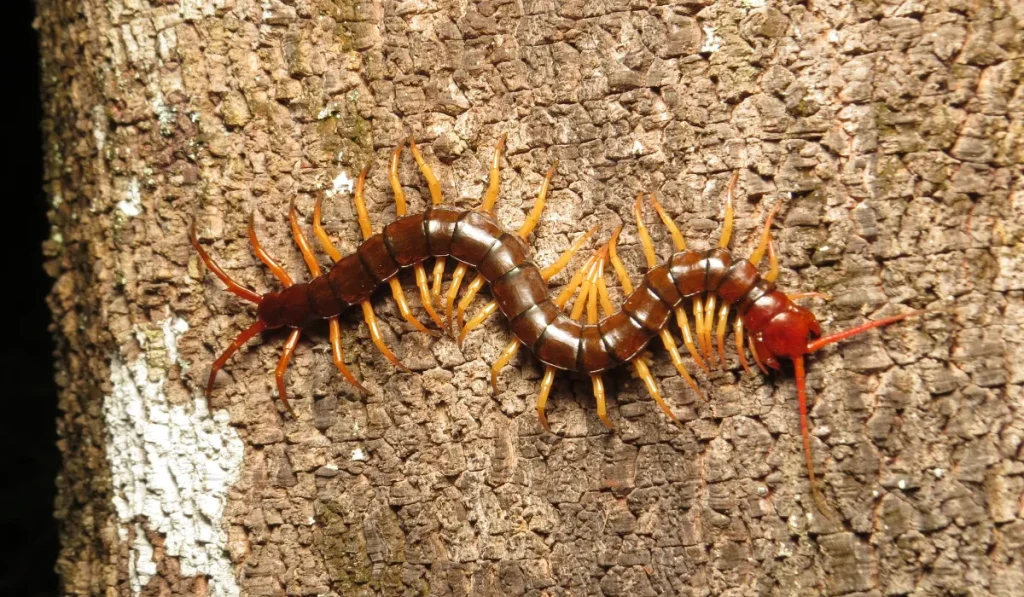
House centipedes in Georgia are generally low-risk predators, and frequent indoor sightings can signal conditions worth checking. They hunt other small arthropods and favor damp, sheltered areas, so seeing them repeatedly in a basement, bathroom, crawl space, or similar area can point to excess moisture or a steady supply of prey. They can bite, although bites are uncommon. Here is how to identify house centipedes, tell them from millipedes, understand what repeated sightings may mean, and make your home less attractive to them.
Are House Centipedes in Georgia Dangerous?
For most homeowners, house centipedes pose little risk. They are predators that use specialized front appendages to capture small prey. People are not their food source, and bites are uncommon.
A bite can occur if a house centipede is handled or pressed against the skin. If you find one inside, avoid picking it up with your bare hands. Remove it without direct contact and take note of where you found it.
One centipede near an exterior doorway does not tell you much about the rest of the house. Regular sightings in the same damp area are more useful because they give you a place to start looking for moisture and prey.
Do House Centipedes Bite?
Yes. House centipedes are capable of biting people, though bites are uncommon. Their front appendages are used to subdue prey, and human encounters are more likely to become a problem when a centipede is handled or trapped against the skin.
There is no benefit to handling one directly. Once it is removed, inspect the immediate area for damp conditions and other small pests.
Why Do House Centipedes Have So Many Legs?
According to Penn State Extension, an adult house centipede has 15 pairs of legs, giving it 30 legs in total. Centipedes have one pair of legs on each leg-bearing body segment.
The long legs suit an active predator. House centipedes move quickly across floors and walls while pursuing prey, which is why they can seem especially noticeable when a light comes on or stored items are moved.
Their name does not mean every centipede has 100 legs. Leg counts vary among centipedes, while the familiar adult house centipede has 15 pairs.
Why Are Centipedes in Georgia Homes?
House centipedes need suitable shelter and a source of prey. Moist areas can provide both, especially when small insects and other arthropods are already active there.
Where you see the centipede matters. Repeated activity in a basement, crawl space, bathroom, utility area, or other damp location gives you a practical starting point for inspection. Check the area itself before assuming the centipede is the whole problem.
Check for Excess Moisture
House centipedes are associated with damp or humid conditions. University of Minnesota Extension includes moisture reduction as part of homeowner guidance for managing centipedes.
Look for leaking plumbing, condensation, standing water, damp crawl-space conditions, and drainage problems near the foundation. Clogged gutters can also keep areas around a home wetter than they need to be.
A dehumidifier can help with an indoor area that stays humid, but fix an identifiable moisture source when one is present. A leaking pipe or drainage problem will keep creating favorable conditions until it is corrected.
Check for the Pests They Hunt
Centipedes are predators of small insects and other arthropods. If they keep appearing in the same area, look for evidence of prey rather than treating each centipede as an unrelated visitor.
Cockroaches, silverfish, spiders, and other small arthropods can become prey. If you are also finding cockroaches in your Georgia home, their presence may help explain why centipedes continue hunting in the same rooms.
A centipede sighting by itself does not prove that another pest has established an infestation. Repeated centipede activity combined with direct signs of other pests gives you a stronger reason to investigate the prey source.
House Centipede vs. Millipede: How to Tell the Difference
Centipedes and millipedes are easy to confuse at a glance, yet their bodies and feeding habits are different. Correct identification helps you understand what conditions around the property are supporting the activity.
| Feature | House Centipede | Millipede |
| Body shape | Flattened body with long legs extending from the sides | More rounded or cylindrical body |
| Leg arrangement | One pair per leg-bearing body segment | Two pairs on most apparent body segments |
| Movement | Fast and active | Usually slower |
| Diet | Hunts small insects and arthropods | Feeds mainly on decaying plant material |
| Conditions to check | Moisture and available prey | Moisture and decaying organic material |
The diet is one of the most useful differences. Centipedes actively hunt, while millipedes feed mainly on decaying plant material. Smart Solutions treats moisture and harborage as relevant factors for both, but a recurring centipede problem also gives you a reason to look for prey.
Movement can help with identification too. House centipedes tend to move quickly when exposed, while millipedes are generally slower. Body shape and leg arrangement provide better identification clues than color alone.
What Does It Mean If You Keep Seeing Centipedes?
If house centipedes appear regularly, start recording where you find them. A pattern around the same bathroom, basement wall, crawl-space entrance, utility room, or garage can narrow down the conditions you need to inspect.
Look for moisture first, then check for pest activity and openings around the area. Gaps around doors, windows, vents, utility penetrations, and other exterior openings can give centipedes and smaller pests a path indoors.
Look for Direct Signs of Prey
Centipedes need food, so recurring activity is more meaningful when you also find evidence of other pests. Cockroach droppings, repeated silverfish sightings, active spider webs, or small insects in the same area can help explain why a predator keeps returning.
Recurring spiders in Georgia homes can reflect similar prey-rich conditions. When several predators keep appearing in one part of the house, inspect that area for the insects supporting them instead of assuming each sighting is a separate issue.
Use direct evidence when deciding what needs treatment. A predator can point you toward a problem, but the predator alone does not identify the prey species or establish the size of an infestation.
How to Get Rid of Centipedes in Georgia Homes
Long-term centipede control starts with the conditions that support them. Focus on moisture, prey, access points, and sheltered areas around the structure.
University of Georgia Cooperative Extension provides Georgia-based household pest information, while Smart Solutions’ service approach also emphasizes moisture reduction, harborage removal, exclusion, and treatment of active areas.
Reduce Moisture
Inspect the areas where you see centipedes before making broad changes elsewhere in the home. Check plumbing fixtures, basement walls, crawl spaces, utility areas, and the foundation perimeter for signs of persistent dampness.
Fix leaks, keep gutters clear, and correct drainage problems that leave soil or building materials wet. Use a dehumidifier where indoor humidity remains high after obvious water sources have been addressed.
Outside, keep wet leaves, wood piles, and dense vegetation from creating damp shelter beside the house. These are among the harborage conditions Smart Solutions checks when addressing centipede and millipede activity.
Reduce the Available Prey
When centipedes have a dependable food source, removing individual centipedes leaves that food source untouched. Inspect cabinets, storage areas, basement edges, crawl spaces, and utility rooms for the small pests they may be hunting.
Many steps used to prevent spider infestations also help here because both predators benefit from available prey and sheltered entry points. Reducing other pest activity can make the area less productive for centipedes.
If several pest types are active or the source is difficult to locate, a professional inspection can identify which areas need attention before treatment begins.
Seal Common Entry Points
Check around exterior doors, windows, vents, utility penetrations, and foundation openings. Damaged weather stripping, worn door sweeps, torn screens, and visible gaps can allow centipedes and other small pests into the structure.
Smart Solutions recommends door sweeps, weather stripping, and window screens as part of long-term centipede and millipede prevention. Repairs should match the opening and building material rather than relying on a single sealing method for every gap.
Exclusion is most effective when you also correct the conditions on either side of the opening. A sealed gap cannot dry a damp crawl space or reduce an established prey population.
Remove Damp Harborage
Stored clutter can make pest activity harder to find, especially along basement and garage walls. Keep floor edges and corners accessible enough to inspect and clean.
Outside, clear accumulated leaves, maintain gutters, move wood piles away from the structure, and trim vegetation that creates damp cover near the foundation. Smart Solutions also recommends pulling back leaves and mulch in treatment areas so the underlying soil can be addressed when needed.
These changes reduce sheltered, moisture-holding areas around the home and make future pest activity easier to detect.
When Centipedes Point to a Larger Pest Problem
Recurring centipedes deserve more attention when other evidence lines up with them. Repeated sightings in a damp basement where roaches, silverfish, spiders, or other small pests are also active give you more information than an occasional centipede near an exterior door.
The inspection should answer practical questions: Where is moisture collecting? What prey is present? Where are pests entering or hiding? Once those answers are clear, treatment can address the source of the activity instead of repeatedly removing visible centipedes.
This becomes especially useful when centipedes return after basic cleaning or removal. Recurring activity can continue until the moisture, prey, or access problem is corrected.
Keeping Centipedes Out of Your Georgia Home
Keeping centipedes out starts with reducing the conditions that support them. Correct moisture problems, remove damp harborage, limit pest activity, and seal openings that give small pests access to the home.
If centipedes keep appearing in your Atlanta-area home, Smart Solutions Wildlife Removal and Pest Control can inspect the areas where activity is occurring and identify contributing pest and moisture conditions. Centipedes are included among the common pests covered by the SmartGuard plan.
Recurring sightings are easier to solve when you know what is supporting them. Contact Smart Solutions to schedule an inspection and get a treatment plan based on the conditions found at your property.


