
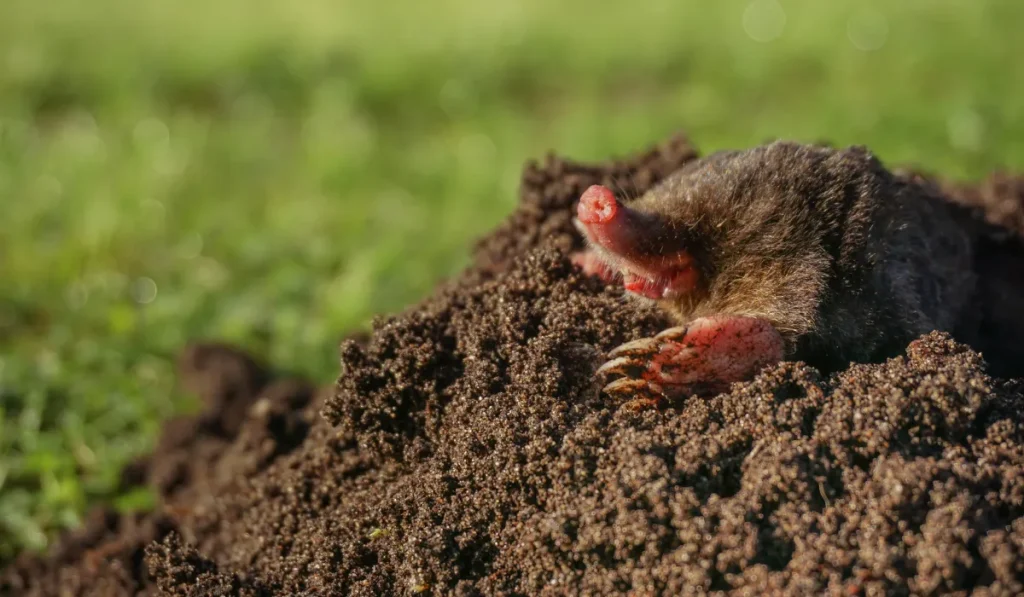
Moles in Georgia create raised tunnels and soil mounds as they search underground for earthworms, grubs, and other small soil animals. They do not normally eat your grass, flowers, or plant roots, but their digging can lift turf and disturb soil around landscaping. If new ridges or mounds are showing up in your yard, focus first on confirming mole activity, ruling out voles, and identifying which tunnels are still being used.
What Do Raised Tunnels and Mounds Mean?
Raised ridges usually come from shallow mole tunneling. As a mole moves just below the lawn surface looking for food, it pushes the soil upward and leaves a winding ridge through the grass.
Loose soil mounds can form when a mole excavates deeper underground. A yard can have both types of damage, so the presence of ridges and mounds does not necessarily point to separate problems.
Some Mole Tunnels Are No Longer Active
A tunnel can remain visible long after a mole stops using it. Some shallow feeding routes are used briefly, while other sections of the tunnel network receive repeated traffic.
University of Missouri Extension’s guidance on controlling nuisance moles recommends locating active runs when planning control. That keeps the focus on fresh activity instead of every ridge left behind in the lawn.
Moles Damage Lawns by Moving Soil
Moles are not chewing through the grass as they tunnel. The visible damage comes from displaced soil, which can lift sod, create uneven ground, and disturb soil around plant roots.
If you see obvious feeding damage instead, such as gnawed roots, bulbs, stems, or bark, look beyond moles. Those signs fit a plant-feeding animal more closely.
Why Did Moles Suddenly Show Up in Your Yard?
Fresh tunnels do not always mean a mole just arrived. Moles remain active underground, but changes in soil conditions can make their feeding routes much more noticeable at the surface.
Moisture is one factor. When conditions favor shallow feeding activity, fresh ridges can appear across a lawn that showed little visible activity before.
Rain and Irrigation Can Change Where You See Activity
Moist soil can make shallow tunneling easier, and the soil animals moles hunt also respond to changing ground conditions. After rain or regular irrigation, mole activity may become more visible near the surface.
During drier conditions, a mole can spend more time deeper underground, leaving fewer obvious ridges. A sudden increase in visible tunnels therefore does not tell you how many moles are present.
Grubs Are Only One Food Source
Moles eat grubs, but they also feed on earthworms and other small soil animals. A lawn does not need a severe grub problem to attract mole activity.
If grubs are damaging the turf, deal with that lawn issue on its own merits. Mole control still needs to address active mole activity.
Do Moles Eat Plants, Grass, or Roots?
No. Moles do not normally feed on grass, flowers, vegetables, bulbs, or plant roots. They tunnel through the soil to find animal prey.
Their digging can still affect plants indirectly. A shallow tunnel may loosen the soil surrounding roots or lift turf away from firm contact with the ground. The plant may look stressed even though the mole never fed on it.
Chewed Roots Point More Toward Voles
If roots, bulbs, stems, or bark have been eaten, look for signs of voles or another plant-feeding animal. Voles are rodents, and their diet makes them a much better fit for direct vegetation damage.
Use both the soil and the plant damage when identifying the problem. Raised ridges with no chewing fit moles more closely. Gnawed vegetation, surface runways, and burrow openings fit voles more closely.
Moles vs. Voles: How Can You Tell the Difference?
Moles and voles can both create problems in lawns and landscaped areas, but they leave different evidence. Moles hunt underground for animal prey. Voles are small Georgia rodents that feed on plant material and can damage landscaping by eating roots.
The easiest way to separate them is to look at what has been disturbed. Mole problems center on displaced soil. Vole problems are more likely to include direct feeding damage to vegetation.
| What You Notice | More Typical of Moles | More Typical of Voles |
| Raised ridges through turf | Yes | No |
| Loose soil mounds | Yes | Less characteristic |
| Shallow underground tunnels | Yes | Burrows and surface runways are more characteristic |
| Runways through grass or vegetation | Less characteristic | Yes |
| Chewed roots or bulbs | No | Yes |
| Gnawed stems or bark | No | Yes |
| Main food | Earthworms, grubs, and other soil animals | Plant material |
One Yard Can Have More Than One Problem
Do not assume every damaged area has the same cause. A mole may be tunneling through turf while voles are feeding around a planting bed elsewhere on the property.
Matching the damage to the animal prevents wasted treatment. If you only respond to tunnels while roots continue to disappear, the source of the plant damage may still be active.
Why Do Castor Oil and Noise Devices Disappoint Homeowners?
Castor-oil repellents, sonic stakes, ultrasonic devices, and vibrating products are commonly used to discourage mole activity. The difficulty is measuring what they actually accomplished.
If fresh tunnels stop appearing beside a device but begin farther across the yard, the mole may simply have changed routes. A quieter patch of lawn does not by itself confirm that the animal has left.
Castor Oil Does Not Remove the Mole
Castor-oil-based products are intended to make treated areas less attractive to moles. Results can vary, and the product does not physically remove an animal from the property.
That leaves homeowners watching for new tunnels elsewhere. If the activity shifts beyond the treated section, the original mole problem is still present.
Noise and Vibration Have the Same Practical Limitation
Sonic, ultrasonic, and vibrating devices are also designed to discourage activity rather than confirm removal. A change in tunnel location can therefore be mistaken for control.
When you need to know whether mole activity is continuing, fresh soil disturbance provides more useful information than whether a particular patch of lawn has gone quiet.
What Works for Mole Control in Georgia?
Effective mole control starts with two questions: Is a mole actually causing the damage, and which tunnels are active now? Those answers narrow the control area and help separate current activity from marks left earlier.
Professional assessment is especially useful when ridges cover a large section of lawn or when mole and vole signs overlap. Correct identification should come before any control method.
Target Active Tunnels for Trapping
Trapping works best when it is placed on tunnels the mole is currently using. Setting traps beside old feeding ridges is less useful if the animal has already moved to another route.
Fresh soil movement helps identify where activity is continuing. University of Missouri Extension includes trapping active runs among established methods for controlling nuisance moles, making tunnel selection a central part of the process.
After control begins, continue watching for new ridges or freshly displaced soil. Existing tunnel marks can stay visible, so old damage alone cannot tell you whether the mole is still active.
Manage Grubs When Grubs Are Damaging the Turf
A grub problem and a mole problem can occur in the same lawn, but they are not the same issue. Moles may eat grubs, yet earthworms and other soil organisms remain available even when grub numbers are reduced.
University of Georgia Cooperative Extension provides Georgia-specific turf information for evaluating lawn pest problems. When grubs themselves are damaging the lawn, managing them makes sense for turf health. It should not replace direct mole control.
What Should You Do After Mole Activity Stops?
Once no fresh tunneling appears, turn your attention to the lawn. Existing ridges may still be visible, so judge current activity by new soil movement rather than the total amount of old damage.
Raised sections of turf can often be pressed back into contact with the soil. More heavily disturbed areas may need additional lawn repair based on the condition of the grass.
Mark Old Damage Before Assuming the Mole Is Back
If the lawn already contains many tunnels, flattening or marking existing ridges makes fresh activity easier to recognize. New raised soil in those areas gives you a clearer indication that tunneling has resumed.
This simple check also helps prevent unnecessary treatment of abandoned routes. You can concentrate on what has changed instead of reacting to every old ridge.
Making the Right Mole Control Choice for Your Georgia Yard
For moles in Georgia, raised tunnels usually reflect underground feeding activity, not a mole eating your plants. Direct root, bulb, stem, or bark damage points more strongly toward voles, while fresh ridges and mounds fit mole activity.
Control should start with identification and active-tunnel assessment. Targeted trapping addresses the animal directly, while grub management belongs in the plan only when grubs are also damaging the lawn. Repellents that simply shift tunneling can make it harder to tell whether the problem is actually resolved.
Smart Solutions Wildlife Removal and Pest Control services mole and vole problems in Georgia. If fresh ridges, mounds, or unexplained landscape damage keep appearing, contact Smart Solutions to schedule an assessment and discuss the appropriate service for your property.


