
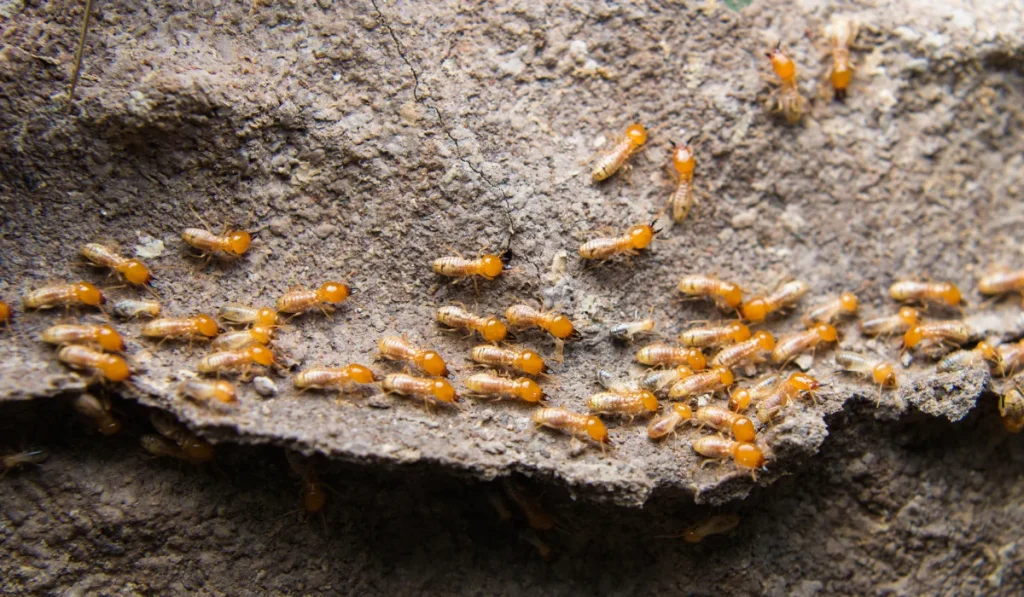
If you own a home in Georgia, knowing how to recognize termite activity can help you respond before hidden damage progresses. Subterranean termites are the main termite concern Smart Solutions encounters across Metro Atlanta, and their underground habits can make them difficult to spot. This guide explains the types of termites in Georgia you should know about, when swarming occurs, how to recognize common warning signs, which property conditions can contribute to activity, and how professional termite inspection and treatment work.
What Types of Termites Are Found in Georgia?
Subterranean termites are the primary focus for homeowners dealing with termites in Georgia. These insects establish colonies below ground and travel between the soil and wood or other cellulose-containing materials. Their underground lifestyle allows workers to remain concealed while they forage.
According to the U.S. Environmental Protection Agency’s guidance on termite identification and control, subterranean termites can build mud tubes that connect their underground environment with aboveground food sources. These protected pathways are one of the more recognizable signs of subterranean termite activity around a structure.
Smart Solutions primarily encounters subterranean termite problems in Metro Atlanta and lists Eastern subterranean and Formosan termites among the termites it controls. Because different termite activity can require different treatment decisions, identification is an important first step rather than something to guess from a damaged board or a few winged insects.
Eastern Subterranean Termites
An Eastern subterranean termite colony contains individuals with different roles. Workers are soft-bodied and light-colored, while soldiers have larger heads and jaws used in colony defense. Reproductive termites, commonly called swarmers or alates, develop wings and leave established colonies to reproduce.
You are more likely to notice swarmers than workers because the workers generally remain inside soil, wood, and protected travel routes. That is one reason a property can have termite activity without homeowners regularly seeing the insects themselves.
Formosan Termites
Smart Solutions also provides treatment for Formosan termites, which are another subterranean termite. Because the company’s Metro Atlanta work centers primarily on subterranean termite problems overall, a suspected infestation should be identified through an inspection rather than assuming which species is present.
An inspection can consider the insects themselves along with mud tubes, damaged wood, entry routes, foundation conditions, crawl spaces, and other signs of activity. That broader view helps determine what type of treatment fits the property.
When Do Termites in Georgia Swarm?
Termites in Georgia can remain concealed for long periods, but swarming makes an established colony much easier to notice. Smart Solutions’ service information identifies spring, generally March through May, as the typical swarming period for subterranean termites in Georgia.
A termite swarm involves reproductive members leaving an established colony to pair and start new colonies. Afterward, you may find loose wings on windowsills, around doors, near baseboards, or in other places where swarmers collected.
Finding swarmers outdoors does not automatically show that your house is infested. Finding numerous swarmers or discarded wings inside a structure, however, is a good reason to have the area inspected. The visible swarmers represent only the reproductive stage, not the workers that may be traveling through soil or concealed structural areas.
What to Do if You See a Termite Swarm
If you find suspected termite swarmers, avoid relying solely on where the insects landed to determine the source. Instead, note where you saw them and, when practical, save a sample or take a clear photograph.
A professional can use that information along with an inspection of the surrounding structure. That is more useful than treating visible swarmers while leaving the underlying source unexamined.
What Are the Signs of Termites in Georgia Homes?
Several signs can point to subterranean termite activity, but no single symptom should be interpreted without context. Smart Solutions looks for visible termites, mud tubes, discarded wings, damaged wood, entry points, and conditions around the property that may support termite access.
Mud Tubes
Mud tubes are narrow, soil-like pathways built by subterranean termites as they move between the ground and food sources. You may find them along foundations, crawl space walls, interior structural surfaces, or areas where soil and building materials meet.
Removing a tube does not remove the colony. If you discover one, its location can provide useful information during an inspection.
Discarded Wings and Swarmers
After swarming, reproductive termites shed their wings. Small piles of wings around windows, doors, baseboards, or other areas can justify a closer look, particularly when they appear indoors.
The insects themselves can also help with identification. Termite swarmers and flying ants have several visible differences.
| Feature | Termite Swarmers | Flying Ants |
|---|---|---|
| Antennae | Relatively straight | Bent or elbowed |
| Waist | Broad | Narrow and constricted |
| Wings | Two pairs of similar length | Front wings longer than rear wings |
| Appearance | Body looks more uniform in width | Distinct head, thorax, and narrow waist |
If you cannot confidently identify what you found, have the insect examined rather than assuming it is an ant or termite.
Wood Damage
Termite activity can affect framing, trim, flooring, and other wooden components. Smart Solutions’ inspection information notes signs such as damaged or splintering wood and wood that sounds hollow when checked.
Because moisture problems and other wood-damaging organisms can create some similar symptoms, damaged wood alone does not confirm an active termite infestation. Inspection helps distinguish termite evidence from other causes.
Why Are Georgia Homes Vulnerable to Subterranean Termites?
Subterranean termites reach structures from the soil, which makes the relationship between a home’s foundation, moisture, and nearby wood especially relevant. Some entry routes can be visible, while others remain concealed by construction materials.
Smart Solutions identifies slab cracks, expansion joints, plumbing penetrations, and settlement gaps as potential termite access points. Termites may also travel behind brick, stucco, siding, and other exterior finishes before reaching wooden components.
Crawl spaces deserve similar attention. Wood debris, form boards, soil-to-wood contact, and persistent moisture can create conditions that warrant correction. Around many Metro Atlanta properties, these areas are not part of the homeowner’s normal daily view, so changes can go unnoticed.
Moisture and Property Conditions
Moisture does not prove that termites are present, but controlling excess moisture is an established part of reducing conditions associated with subterranean termites. Leaking plumbing, poor drainage, clogged gutters, and water collecting near the foundation can all leave parts of a property persistently damp.
The University of Georgia Cooperative Extension provides Georgia-specific educational information on pests and structural pest management. Combining sound home maintenance with professional inspection when signs appear gives you a more practical approach than relying on a single preventive measure.
How Can You Reduce the Risk of Termites in Georgia?
Reducing termite risk starts with making the area around your home less favorable for concealed access and moisture buildup. You do not need to redesign your property, but several maintenance habits can make foundations and vulnerable areas easier to monitor.
Manage Moisture Around the Structure
Repair plumbing leaks, address air-conditioning drainage problems, and keep gutters and downspouts functioning correctly. Water should not be allowed to collect unnecessarily around the foundation or beneath the home.
In crawl spaces, pay attention to persistent dampness and plumbing leaks. Moist conditions may indicate a building or drainage problem that needs correction regardless of whether termites are currently present.
Remove Unnecessary Wood Sources
Smart Solutions recommends removing tree stumps, fallen or rotting wood, wood debris, and similar materials near structures when practical. Wood left directly against the soil can provide another potential food source for subterranean termites.
Also check crawl spaces and areas beneath porches or additions for leftover construction wood. Removing unnecessary wood debris makes these areas easier to inspect and eliminates material termites can feed on.
Keep the Foundation Accessible for Inspection
Dense landscaping and stored materials can make sections of a foundation difficult to see. Keeping enough access around the structure helps you notice mud tubes, moisture problems, cracks, and other changes sooner.
Termite prevention cannot guarantee that a colony will never approach a property. The goal is to correct avoidable conditions and make signs easier to detect.
How Are Termites in Georgia Professionally Treated?
Professional control for termites in Georgia begins with an inspection rather than a one-size-fits-all treatment. Smart Solutions evaluates visible activity, structural conditions, likely entry areas, and evidence of damage before recommending a plan.
Treatment methods can include soil and foundation applications, termite bait stations, sub-slab treatment in appropriate construction areas, and targeted interior treatment where active termites are found. The combination depends on the structure and the location of activity.
Soil and Foundation Treatments
Smart Solutions uses foundation trenching and soil treatment as one option for subterranean termites. Where concrete features such as patios or driveways interfere with access to soil next to the structure, sub-slab drilling and treatment may be part of the plan.
The purpose is to address termite travel through the soil around structural areas. Exact application procedures depend on the property and the labeled product being used, which is why professional evaluation comes before treatment.
For questions involving state rules for structural pest-control work and termite treatments, the Georgia Department of Agriculture’s Structural Pest Control program is the appropriate regulatory resource.
Termite Bait Stations
Smart Solutions also uses the Trelona Advanced Termite Bait System for subterranean termite control. The company’s service materials identify novaluron as the active ingredient in the bait system.
Bait stations are installed around the structure where foraging termites can encounter them. Termite baiting can also provide a way to monitor activity over time, which is useful because subterranean termites spend so much of their lives out of sight.
Professional treatment is followed by monitoring and inspection according to the service plan and conditions at the property. Smart Solutions’ termite service information also includes renewable protection options following treatment.
Protecting Your Georgia Home From Termites
The most useful approach to termites in Georgia is to know what deserves attention and respond to evidence rather than waiting for extensive visible damage. Mud tubes, indoor swarmers, piles of discarded wings, suspicious wood damage, moisture issues, and concealed foundation areas are all reasons to take a closer look.
A professional inspection can determine whether the evidence points to active termites, previous activity, or property conditions that should be corrected. Smart Solutions Wildlife Removal and Pest Control provides termite inspections and treatment options for homes and businesses across its Metro Atlanta service area, including soil and foundation treatments, bait stations, and ongoing protection.
If you have found suspicious activity or want your property evaluated, you can contact Smart Solutions to request a termite assessment. Starting with an inspection allows the treatment plan to reflect the construction, termite evidence, and conditions at your specific property.


