
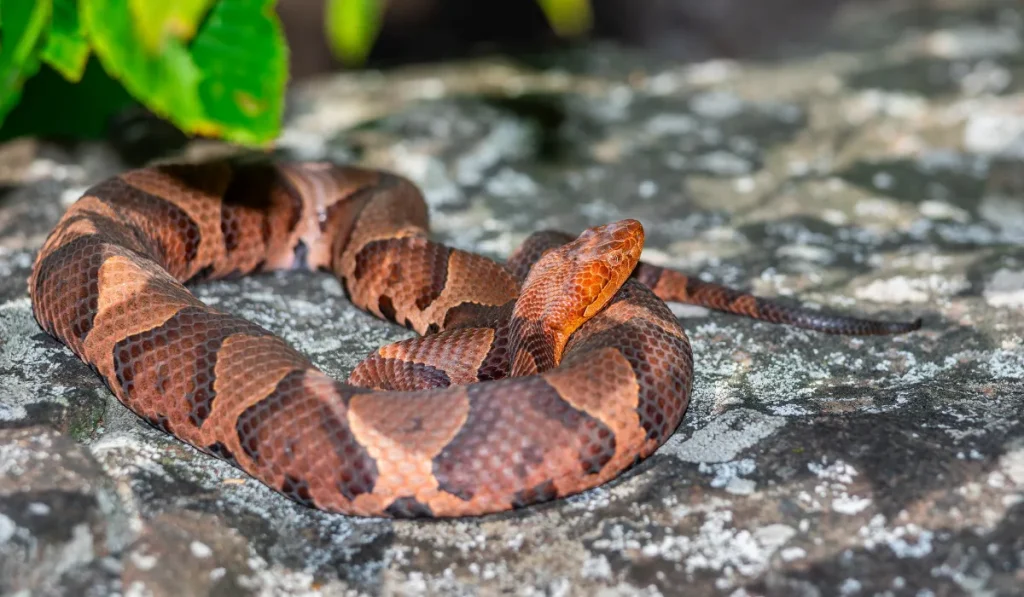
A Georgia copperhead is a venomous pit viper best identified by dark hourglass-shaped crossbands that are narrow across the back and wider along the sides. Around Atlanta homes, copperheads can blend into leaf litter, woodpiles, stone walls, and dense groundcover. Knowing the pattern, common lookalikes, bite response, seasonal activity, and yard conditions that provide cover can help you handle a sighting safely. If you cannot identify a snake from a safe distance, leave it alone and keep children and pets away.
How to Identify a Georgia Copperhead
The scientific name for the copperhead is Agkistrodon contortrix. Adults have stout bodies and may range from tan and light brown to pinkish-brown in overall color. The head may have a copper tone, but color alone is not a dependable identification method.
The University of Georgia Savannah River Ecology Laboratory provides regional information on snakes and other reptiles. When identifying a copperhead, focus first on the body pattern rather than trying to judge the animal by head shape, color, or another single feature.
Look at the Hourglass-Shaped Crossbands
A copperhead’s dark crossbands narrow over the spine and widen down the sides of the body. From above, that creates the hourglass shape most closely associated with the species.
Camouflage can make the bands difficult to see among dry leaves, pine straw, soil, or wood. If the pattern is partly hidden, do not move closer just to settle the identification.
Head shape is also a poor shortcut. Nonvenomous snakes can flatten their heads when defensive, making the head look wider than normal. Trying to inspect a snake’s pupils requires getting dangerously close and is not an appropriate identification method for a homeowner.
What Juvenile Copperheads Look Like
Young copperheads generally show the same basic crossband pattern as adults. Juveniles can also have a yellowish or greenish-yellow tail tip.
The tail is a supporting clue, not a substitute for the hourglass pattern. A small snake with unclear markings should be left alone rather than handled based on a guess about its age or species.
Georgia Copperhead vs. Common Harmless Lookalikes
Corn snakes and water snakes are among the harmless snakes that can be mistaken for copperheads because they may have bold markings or relatively heavy bodies. The quickest useful comparison is the pattern across the back and sides.
The Georgia Department of Natural Resources recognizes six native venomous snake species in Georgia: copperheads, cottonmouths, eastern diamondback rattlesnakes, timber rattlesnakes, pygmy rattlesnakes, and eastern coral snakes. Many other snakes found around Georgia homes are nonvenomous.
| Feature | Copperhead | Corn Snake | Water Snake |
| Venomous | Yes | No | No |
| Body | Stout | Usually more slender | Often heavy-bodied |
| Main Pattern | Dark hourglass-shaped crossbands | Reddish or brown blotches along the back | Bands or blotches vary by species |
| Pattern Across Back | Narrow over the spine, wider down the sides | Dorsal saddles or blotches | Does not form the classic copperhead hourglass |
| Best Identification Clue | Side-heavy hourglass bands | Back-centered blotches | Pattern varies, often associated with wet habitats |
Copperhead vs. Corn Snake
Corn snakes commonly have reddish, orange-brown, or brown blotches running along the back. Those markings look more like separate dorsal saddles than the copperhead’s crossbands, which narrow over the spine and broaden toward the sides.
Corn snakes are nonvenomous. If the markings are not clear enough to make the distinction from where you are standing, there is no reason to pick up or corner the snake for a closer look.
Copperhead vs. Water Snake
Water snakes in the genus Nerodia are nonvenomous, but some have heavy bodies and dark markings that can resemble a venomous snake at first glance.
Their markings vary by species, but they do not form the copperhead’s characteristic narrow-over-the-back, broad-at-the-sides hourglass pattern. Habitat can provide context, especially near ponds, streams, and other wet areas, but pattern is more useful than location alone for identification.
What to Do After a Copperhead Bite
A suspected copperhead bite needs prompt medical attention. Move away from the snake, seek emergency medical care, and call 911 when appropriate. Poison Control is available at 1-800-222-1222 for guidance.
According to the Centers for Disease Control and Prevention, an estimated 7,000 to 8,000 people are bitten by venomous snakes in the United States each year, and about five die. Those figures include bites from all venomous snake species, not copperheads alone. A low national death count does not make an individual bite safe to monitor at home.
What to Do After the Bite
While medical help is being arranged:
- Get a safe distance from the snake.
- Stay as calm and still as practical.
- Remove rings, watches, or other tight items near the affected area before swelling increases.
- Follow instructions from emergency medical personnel or Poison Control.
Do not delay care while trying to identify, catch, or kill the snake. Medical professionals can evaluate the bite without you bringing the animal with you.
What Not to Do
Do not cut the bite, try to suck out venom, apply ice, or use a tourniquet. These measures can cause further injury or delay appropriate treatment.
Copperhead bites can cause pain, swelling, tissue injury, and other symptoms that require professional evaluation. The appearance of the puncture marks does not tell you how serious the bite is.
Copperhead Bites in Children and Pets
A suspected venomous snakebite involving a child requires immediate medical care. Do not wait for pain or swelling to become severe before seeking help.
If a dog or cat may have been bitten, move the pet away from the snake and contact an emergency veterinarian promptly. Follow veterinary instructions rather than attempting to manage the bite at home.
Where Copperheads Hide Around Atlanta Homes
Copperheads can find usable cover in ordinary suburban yards, especially where maintained lawn meets woods, thick landscaping, or undisturbed debris. Their coloring works well against brown leaves, soil, bark, and stone, which can make them difficult to notice before yard work begins.
Common hiding areas include:
- Leaf litter along wooded or landscaped edges
- Woodpiles and brush piles
- Gaps around stone and retaining walls
- Dense shrubs and groundcover
- Clutter around sheds and storage areas
- Shaded areas beside foundations and crawlspaces
These areas do not guarantee that a copperhead is present. They simply provide the kind of concealment that makes a yard more useful to snakes.
Rodents Can Make a Property More Attractive to Snakes
Snakes also use properties where prey is available, including mice, rats, and other small animals.
Reducing rodent access around a Georgia home can remove one food source that may encourage snakes to spend time near structures. Mice and rats are among the rodents found around Metro Atlanta homes, so droppings, gnawing, scratching sounds, or repeated sightings should be addressed as part of the property as a whole.
Smart Solutions evaluates food sources along with snake activity, possible entry points, travel areas, and places where snakes may shelter. Removing one snake does not change the conditions that brought it close to the home.
When Georgia Copperheads Are Most Active
Copperheads in Georgia are generally active during the warmer months, from spring into fall. Their daily movement changes with temperature and weather conditions rather than following the same schedule throughout the season.
During hot weather, activity can shift toward cooler periods of the day, including evenings and nighttime. That can overlap with dog walks, yard cleanup, gardening, and other activities when visibility is lower.
Use Extra Care Where You Cannot See the Ground
Looking before placing your hands or feet into concealed spaces can reduce the chance of surprising a hidden snake.
- Wear closed shoes while working around brush, leaves, firewood, or dense groundcover.
- Look before reaching between stones or into a woodpile.
- Use a flashlight in poorly lit parts of the yard after dark.
- Keep children and pets away from an unfamiliar snake.
- Avoid reaching under material when you cannot see the area first.
These habits are especially useful around wooded edges, retaining walls, debris piles, and other places where ground-level visibility is limited.
How to Make Your Atlanta Yard Less Attractive to Copperheads
Reducing snake habitat starts with the parts of the yard that provide the most cover. Clear unnecessary leaf and brush buildup near walkways, patios, sheds, and the foundation. Keep firewood organized away from heavily used areas, and trim dense vegetation so you can see the ground underneath it.
Stone and retaining walls do not need to disappear from the landscape, but vegetation and debris around them should be kept under control. The goal is to reduce hidden, undisturbed spaces close to places where people and pets spend time.
Reduce Shelter and Prey at the Same Time
Rodent activity should be addressed along with yard cover. Food stored in garages or sheds should be secured, clutter should be reduced, and openings that allow rodents into structures should be corrected.
Reducing roof rat activity around Atlanta properties can remove a potential prey source while solving a separate wildlife problem. A yard with fewer hiding places can still attract snakes if rodents remain active around the attic, crawlspace, garage, or shed.
Check Gaps Around the Home
Openings around crawlspaces, garages, foundations, vents, and other sheltered areas may provide access for snakes or the animals they hunt. Appropriate exclusion work can reduce those routes into the structure.
Smart Solutions’ snake-control process begins with an inspection for snake activity, food sources, entry points, travel zones, and habitat conditions. Depending on what the inspection finds, the plan may include trapping, removal, habitat modification, food-source reduction, or exclusion.
When a Georgia Copperhead Needs Professional Removal
A copperhead close to a doorway, patio, garage, play area, pet run, or other frequently used space should not become a do-it-yourself capture attempt. Move people and pets away from the area and avoid cornering or handling the snake.
Smart Solutions’ snake service is built around more than removing the animal in front of you. The team can inspect the property for shelter, prey, travel routes, and possible entry points, then determine whether trapping, removal, habitat changes, or exclusion are appropriate.
If a suspected copperhead is too close to your home or outdoor living areas, Smart Solutions Wildlife Removal and Pest Control can assess the property and recommend the next step. You can also contact Smart Solutions to request help with professional snake removal.


