
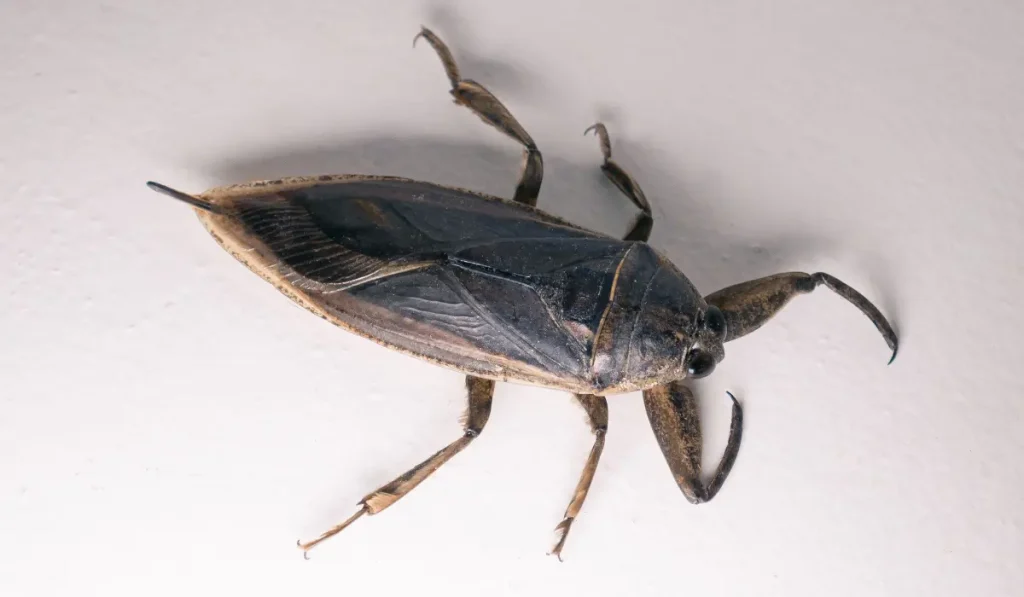
Water bugs in Georgia homes are often large cockroaches, especially American cockroaches, which are also commonly called palmetto bugs. They tend to turn up around damp areas, crawl spaces, plumbing, garages, and exterior openings, and homeowners may notice them more after heavy rain. Seeing one does not mean your home is dirty. What matters is identifying the insect, finding the conditions that are attracting it, and closing the routes that let it indoors.
Are Water Bugs in Georgia Actually Cockroaches?
“Water bug” is a common name, not a precise species identification. Around Georgia homes, people often use it for large cockroaches, particularly American cockroaches. The term palmetto bug is also commonly used for these large roaches.
True aquatic insects are different from cockroaches, so the nickname can cause confusion. If you find a large reddish-brown insect running across a bathroom, garage, kitchen, basement, or crawl space, its appearance and location matter more than what someone calls it.
The terms palmetto bugs and water bugs are often used interchangeably in everyday conversation. For control purposes, the useful question is which cockroach species you have and whether it wandered indoors or is showing up repeatedly.
What Does an American Cockroach Look Like?
American cockroaches are among the larger cockroaches in Georgia. They are reddish-brown, about 1 1/4 to 2 inches long, with long antennae, spiny legs, wings, and a yellowish marking behind the head.
Adults can fly short distances. Their size, color, and wings make them easier to distinguish from smaller cockroach species that are more commonly associated with kitchens, cabinets, and appliances.
University of Florida IFAS provides cockroach identification and biology information for American cockroaches and other species found in warm climates.
Why Do Water Bugs Show Up After Heavy Rain?
Heavy rain can change conditions around a home by saturating soil, mulch, leaf litter, crawl spaces, and other sheltered areas. Cockroaches already living outdoors may move when those locations become wetter or less suitable.
That does not mean a storm suddenly created an indoor cockroach problem. It can make existing outdoor activity easier to notice, especially if roaches find gaps around doors, vents, utility lines, or other parts of the structure.
One large cockroach near an exterior door after rain is different from seeing roaches repeatedly in several rooms. Frequency and location tell you more than the weather alone.
Moisture Can Be a Problem Without Rain
Leaking pipes, damp crawl spaces, clogged gutters, poor drainage, and wet areas near the foundation can also support cockroach activity. These conditions can remain long after a storm has passed.
Moisture often overlaps with shelter. Leaf litter, woodpiles, thick vegetation, trash, and damp debris can give roaches protected places to stay close to the house.
University of Georgia Cooperative Extension provides Georgia-specific information on household pests and property conditions. Around your home, crawl spaces, gutters, foundations, plumbing, and landscaping are sensible places to check when cockroach activity keeps returning.
How Do Water Bugs Get Into the House?
Large cockroaches can enter through gaps around the exterior of a home. The roach you find in a bathroom or kitchen may have traveled through another part of the structure before you saw it.
Common entry points include spaces beneath doors, damaged weather stripping, crawl-space openings, foundation gaps, vents, utility penetrations, garage-door gaps, and openings around plumbing lines. A cockroach found beside a drain may be associated with a damp plumbing area, but its location alone does not prove it came directly through the drain.
Common Areas to Inspect
| Area | What to Check |
| Exterior doors | Worn door sweeps, damaged weather stripping, and visible gaps |
| Garage | Openings along the bottom and sides of the garage door |
| Foundation | Cracks, construction gaps, and utility penetrations |
| Crawl space | Damp conditions and openings around pipes, vents, or utilities |
| Plumbing areas | Leaks, moisture, and gaps around pipe penetrations |
| Vents | Loose, damaged, or missing screening |
Finding the access point can be more useful than concentrating only on the room where the cockroach appeared. Sealing openings helps reduce the chance of more outdoor roaches finding the same route.
Why Crawl Spaces and Plumbing Areas Need Attention
Crawl spaces can provide darkness, moisture, and shelter. Openings around plumbing, vents, and utility lines can also connect these areas with the interior of the home.
Bathrooms, kitchens, laundry rooms, and utility spaces contain water sources and plumbing penetrations. If roaches keep appearing in these locations, inspect for leaks, wall gaps, and connections to crawl spaces or other hidden areas.
Do Water Bugs Fly?
Adult American cockroaches have wings and can fly short distances. Seeing a large roach move through the air does not mean you are dealing with a different insect.
Its flight is not evidence that it is trying to attack you. The cockroach is moving through its surroundings and may land on a nearby wall, piece of furniture, or other surface.
Not every cockroach species behaves the same way. If you repeatedly see smaller roaches around cabinets, appliances, or food-storage areas, the problem may involve another species and require a different treatment plan.
Does Seeing Water Bugs Mean Your House Is Dirty?
No. Large outdoor cockroaches can enter clean, well-maintained homes if they find an opening.
Sanitation still matters because crumbs, grease, pet food, uncovered trash, and other food sources can help cockroaches remain indoors. Cleaning removes resources they can use, but it does not fix a door gap, damp crawl space, or plumbing opening.
Moisture is just as important to check. A leaking pipe, clogged gutter, or wet area near the foundation can help support roach activity even when the kitchen and living areas are kept clean.
What Does One Water Bug Mean?
One sighting cannot tell you how many cockroaches are present. A single American cockroach near a garage or exterior door may have wandered inside, especially after outdoor conditions change.
Repeated sightings deserve closer attention. Roaches appearing in several rooms, recurring activity around plumbing, or droppings and other signs can point to a problem that needs a closer inspection.
Pay attention to where you see them and how often. Those details help separate occasional outdoor entry from ongoing activity around or inside the structure.
Do Water Bugs Carry Germs?
Cockroaches can move through trash, drains, decaying organic material, and other unsanitary areas. Material picked up on their bodies can then be transferred to food, dishes, counters, and other surfaces.
If you find cockroach activity in a kitchen, pantry, or food-storage area, clean affected surfaces, keep food covered, remove crumbs and spills, and keep trash containers closed. These steps reduce both food sources and opportunities for contamination.
Cockroach debris can also contribute to indoor allergen concerns. The practical goal is to keep roaches away from food-preparation and living areas.
The U.S. Environmental Protection Agency’s integrated pest management guidance supports reducing the food, water, shelter, and access pests need. That approach addresses the conditions that allow pest activity to continue.
What Attracts Water Bugs Around Georgia Homes?
Large outdoor cockroaches tend to remain where they can find moisture, food, and protected hiding places. Conditions outside the house can influence what you see indoors even when the interior is clean.
Leaf buildup, woodpiles, thick vegetation, clutter, and damp organic debris can provide shelter near the foundation. Clogged gutters, leaking hoses, poor drainage, and persistently wet soil can add moisture.
Inside, plumbing leaks, accessible food, trash, and clutter can help a roach stay after it gets in. Reducing the conditions that attract water bugs indoors makes your home less supportive of recurring activity.
Check the Exterior, Not Just the Kitchen
Cleaning indoors will not close a gap under a door or remove damp leaves piled beside the foundation. When large cockroaches originate outside, exterior maintenance deserves just as much attention.
Keep excessive leaves, mulch, brush, and stored materials from building up directly against the house. Move firewood away from exterior walls when practical, and trim vegetation that creates dense shelter beside the structure.
A clear perimeter also makes cracks, moisture problems, damaged screens, and other entry conditions easier to spot.
How Can You Keep Water Bugs Out of a Georgia Home?
Keeping water bugs out requires more than removing the roach you can see. The most useful steps address moisture, entry points, and outdoor shelter around the property.
Reduce Moisture Around the Property
Repair leaking pipes, faucets, and hoses, and keep gutters and downspouts clear. Check crawl spaces and areas near the foundation for persistent dampness or drainage problems.
Inside, inspect beneath sinks, around plumbing fixtures, and near appliances for leaks or recurring moisture. Correcting the source prevents the same wet area from returning.
Seal Common Entry Points
Inspect exterior doors for gaps and replace worn weather stripping or door sweeps where needed. Garage doors should also close securely along the bottom and sides.
Check utility lines, plumbing penetrations, vents, siding transitions, and foundation openings. Sealing these areas will not remove cockroaches already indoors, but it can reduce future entry.
Remove Outdoor Harborage
Clear excessive leaves, brush, wood, and debris close to the structure. Avoid storing materials directly against exterior walls where they can create dark, protected hiding places.
Trim dense vegetation near the house and keep the perimeter accessible for inspection. Combined with moisture correction, these changes reduce the conditions that allow outdoor cockroaches to stay close to the building.
When Is Professional Water Bug Control Worth It?
Professional service makes sense when water bugs keep returning, appear in several areas, or continue after obvious moisture and entry problems have been corrected.
Identification comes first. American cockroaches and other outdoor species are managed differently from cockroaches that commonly establish populations indoors. A proper inspection can also uncover damp crawl spaces, structural openings, and exterior harborage that may be easy to miss.
For American cockroaches and similar outdoor species, Smart Solutions focuses on reducing outdoor harborage, addressing moisture and structural conditions, treating affected interior areas when needed, and maintaining exterior perimeter protection. Crawl spaces and attics may also need attention when activity is connected to those areas.
Routine Perimeter Treatment Works Best With Prevention
Routine exterior treatment can help manage recurring cockroach activity around a structure, especially when the conditions attracting roaches are corrected at the same time.
A perimeter treatment cannot repair a leak, replace a damaged door sweep, or clear wet debris from the foundation. Those conditions still need to be addressed.
Combining inspection, moisture correction, sealing, sanitation, exterior maintenance, and routine perimeter treatment gives you a more complete approach to recurring water bug activity.
Keeping Water Bugs Out of Your Georgia Home
Water bugs in Georgia homes are often American cockroaches or other large roaches rather than true aquatic insects. Heavy rain can make them more noticeable, and gaps around doors, crawl spaces, vents, garages, plumbing, and other structural openings can give them access indoors. One sighting does not mean your home is dirty, but repeated activity is a reason to look for moisture, shelter, and entry points.
Reducing moisture, sealing openings, clearing outdoor harborage, and maintaining routine perimeter protection can help limit future activity. If water bugs keep showing up, Smart Solutions Wildlife Removal and Pest Control can identify the cockroach and inspect the conditions around your property. Contact Smart Solutions to schedule service for recurring cockroach activity in your Georgia home.


